
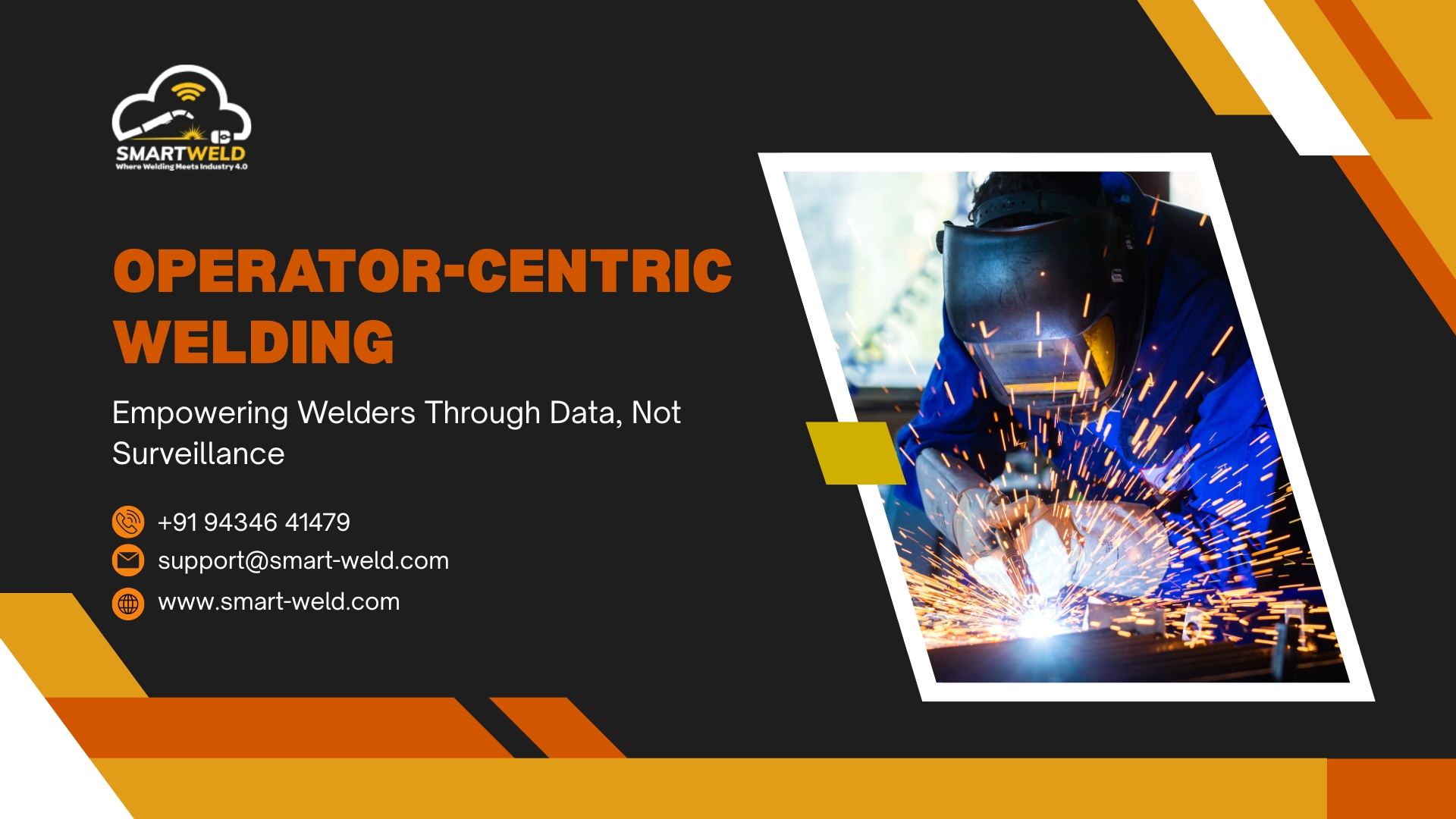
In today’s smart manufacturing era, operator tracking is often misunderstood as digital surveillance. However, when implemented with transparency and purpose, it becomes a tool for empowerment—not monitoring.
Modern IoT-based welding software transforms traditional supervision into a system that helps welders improve performance, gain confidence, and take ownership of their work.
From Monitoring to Empowerment
In a connected welding environment, every arc struck produces valuable data—covering current stability, voltage behavior, arc-on time, and weld duration.
When this data is shared transparently with operators, it becomes a feedback tool for self-improvement, not oversight. Welders gain visibility into performance trends, detect deviations early, and continuously refine their technique.
This shift from passive monitoring to active engagement builds accountability, boosts confidence, and fosters stronger collaboration between human expertise and digital insights.
Digital Traceability Builds Accountability—and Confidence
Accountability is a cornerstone of industrial excellence. Paper logs and manual checks can’t match the accuracy of digital operator tracking systems.
With advanced welding analytics, each weld is automatically tagged with:
-
Operator ID
-
Timestamp
-
Machine used
-
Real-time process parameters
This digital traceability isn’t about blame—it’s about clarity and trust. When deviations or defects occur, teams rely on factual data instead of assumptions. This ensures fair, constructive resolutions and strengthens operator confidence.
For skilled welders, these data-backed records safeguard reputation and credibility—especially in high-stakes industries like automotive, shipbuilding, and heavy machinery, where weld integrity defines product reliability.
Transforming Data into Growth
For data analytics and industrial IoT companies, operator-centric welding offers new opportunities. By converting welding performance data into actionable analytics, manufacturers can answer vital questions like:
-
Which operators maintain optimal arc stability?
-
Where and when do deviations occur most often?
-
How does performance vary across shifts or equipment?
These insights help plant managers identify training needs, balance workloads, and optimize machine utilization.
For welders, this data-driven approach supports personalized skill development. Instead of one-size-fits-all training, they receive targeted recommendations based on real performance data—driving higher morale, retention, and productivity.
Empowering People Through Data
Operator-centric welding analytics bridges the gap between technology and craftsmanship. Real productivity doesn’t stem from supervision—it’s born from empowerment.
When welders gain visibility into their performance, they take ownership of their results. This drives measurable improvements in weld quality, uptime, and overall efficiency.
The future of industrial productivity won’t come from smarter machines alone—but from smarter, better-supported people.
By embracing IoT-based welding analytics, digital traceability, and operator-centric performance systems, manufacturers can redefine productivity—not as a metric to enforce, but as a shared language between humans and technology, inspiring continuous growth and operational excellence.


