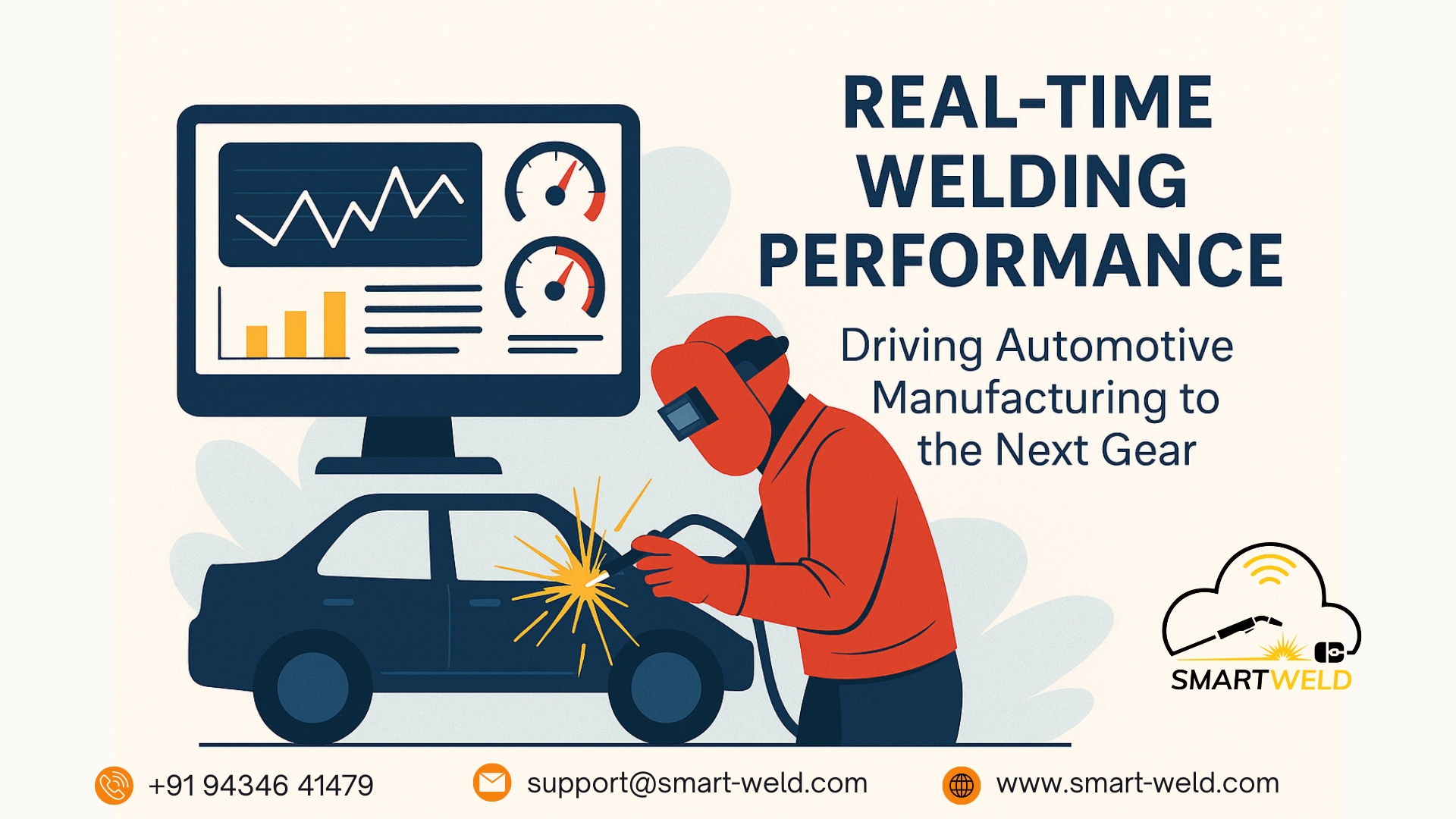
In today’s automotive manufacturing landscape, robotic welding has become the backbone of production. From chassis frames to battery enclosures, thousands of welds must be executed with exceptional precision—and at rapid speed. But with greater automation comes an even greater need for control and oversight.
That’s where real-time performance monitoring powered by smart welding software comes in.
Why Robotic Welding Demands Real-Time Oversight
Industrial robots can weld with extreme accuracy around the clock. However, they aren’t immune to:
-
Torch misalignment
-
Nozzle clogging
-
Inconsistent wire feed rates
-
Weld spatter buildup
-
Sensor or servo drift
Without real-time monitoring, these issues can go unnoticed—leading to defective welds, expensive rework, and potential product recalls.
How Real-Time Monitoring Works
Smart welding software connects directly to robotic arms and integrated sensors, constantly tracking:
-
Weld current, voltage, and arc stability
-
Torch angle and weld path precision
-
Cycle times and joint completion rates
-
Machine health metrics (temperature, vibration, motor torque)
-
Robotic calibration accuracy
All data streams live to a centralized dashboard, allowing engineers and supervisors to visualize performance KPIs in real time.
Key Benefits for Automotive Manufacturing
1. Predictive Maintenance
Spot anomalies before equipment fails. Real-time alerts allow maintenance teams to intervene proactively—reducing unplanned downtime.
2. Faster Troubleshooting
Timestamped logs help trace defect root causes (e.g., wire slippage, arc interruption) within seconds, accelerating response time.
3. Adaptive Welding
Advanced systems auto-adjust parameters mid-weld, maintaining quality across different joint types, materials, or conditions.
4. Traceable Quality Control
Every weld is logged and documented, ensuring full traceability for audits, regulatory compliance, and customer assurance.
5. Improved Robot Uptime
By monitoring tool wear, motor strain, and gas flow, teams can extend the lifespan and availability of robotic cells.
Use Case: Spot Welding in EV Platforms
Electric vehicle (EV) manufacturers rely heavily on robotic spot welding for aluminum and composite frames. In these precision tasks:
-
Weld durations are measured in milliseconds
-
Electrode pressure must be finely balanced
-
Thermal control is crucial for safety
Real-time monitoring ensures these parameters stay within tolerance—and flags deviations before they result in defects or failures.
From the Floor to the Cloud
Modern welding platforms extend beyond the factory floor with cloud-based capabilities:
-
Remote monitoring across facilities
-
AI-driven benchmarking and anomaly detection
-
Historical performance trend analysis
-
Data-informed production optimization
Plant managers and quality leads can access real-time insights from anywhere—driving faster decisions and smarter operations.
Accelerating with Confidence
The automotive industry is rapidly shifting toward smart factories—and robotic welding is at the heart of this transformation. But speed and automation are only effective when paired with visibility and control.
By integrating real-time performance monitoring, manufacturers can:
✅ Maximize robot uptime
✅ Reduce scrap and rework
✅ Achieve tighter tolerances with confidence
✅ Meet global quality standards
✅ Scale production without sacrificing precision
Real-time data turns robotic welding from a black box into a performance powerhouse. For today’s automotive innovators, it’s the key to building safer, stronger vehicles—faster and smarter.