
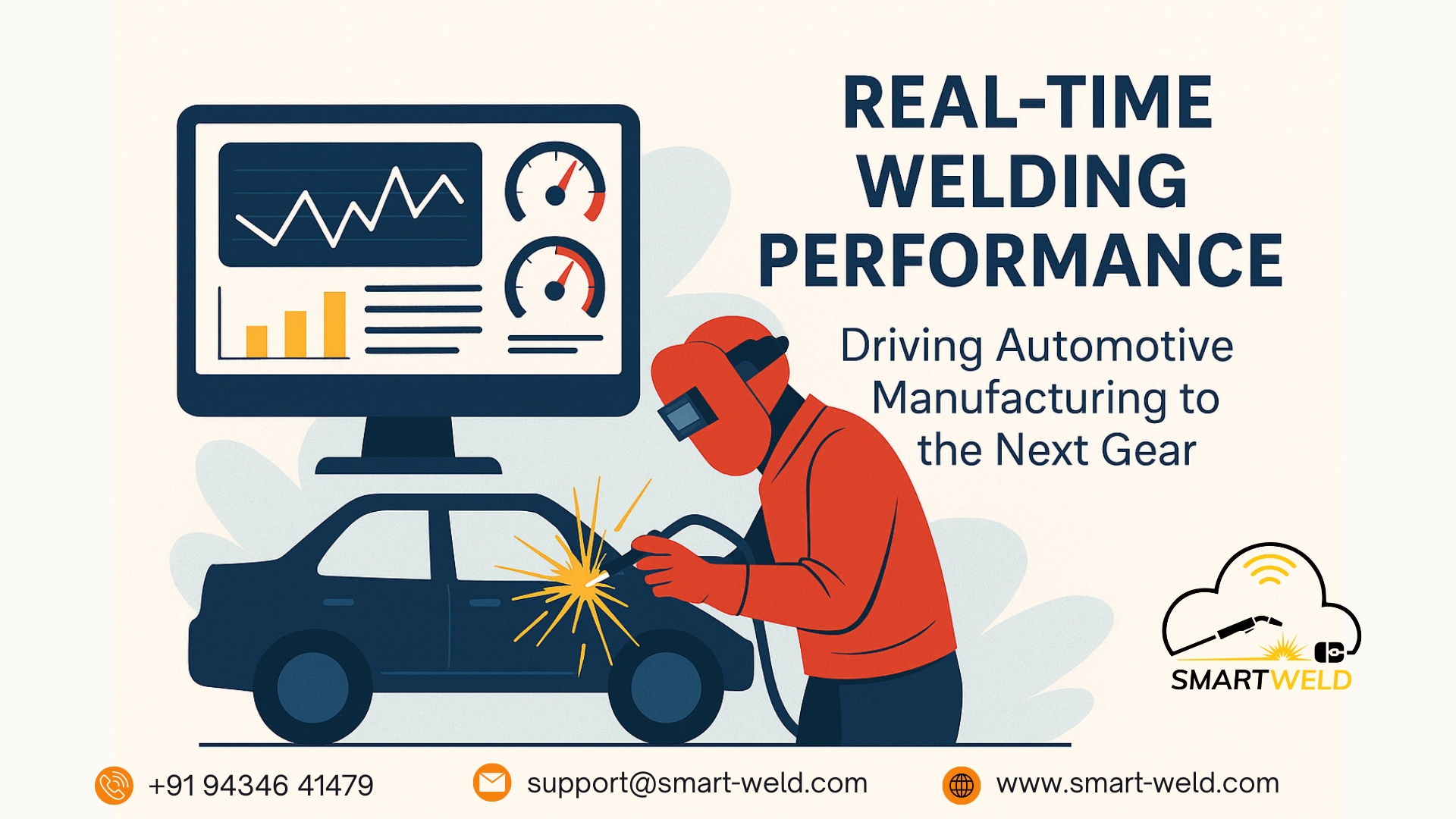
In today’s fast-paced automotive industry, success hinges on speed, precision, and uncompromising quality. Whether it’s a family SUV or a cutting-edge electric vehicle, consumers expect durable, reliable, and safe machines. But how can manufacturers consistently deliver this level of excellence at scale?
The answer: Real-time welding performance monitoring software – Powered by Ebiw (SmartWeld) Team
Why Real-Time Welding Monitoring is Crucial in Automotive Production
Modern assembly lines execute thousands of welds daily. Even slight deviations in current, voltage, or arc time can compromise structural integrity, safety, or regulatory compliance. Traditionally, such flaws were only discovered during final inspection—or worse, after vehicles hit the road.
Real-time monitoring flips that script. It delivers unmatched visibility and control right from the welding floor, empowering manufacturers to detect and resolve issues instantly.
What Does Real-Time Monitoring Include?
Smart welding software integrates seamlessly with welding machines, sensors, and factory networks to monitor:
-
Weld current and voltage
-
Arc time and weld duration
-
Torch position and travel speed
-
Shielding gas flow and wire feed rate
-
Ambient conditions like temperature and humidity
This data is streamed live, analyzed on the fly, and visualized on intuitive dashboards—enabling proactive, in-the-moment decision-making.
Key Benefits for Automotive Manufacturers
1. Instant Error Detection
The software flags deviations the moment they occur. Operators and engineers receive immediate alerts—no waiting for quality checks or audits.
2. Maximized Uptime
Predictive maintenance features detect early signs of wear—like contact tip erosion or gas leakage—before they cause downtime.
3. 100% Quality Assurance
Continuous monitoring enables full-batch inspection, replacing manual spot checks with digital precision.
4. Adaptive Process Control
Some systems adjust welding parameters in real time using AI—ensuring consistent weld quality even as parts or conditions vary.
5. Faster, Smarter Decisions
Mobile alerts and live dashboards empower teams to make data-driven decisions on the production floor—essential for just-in-time operations.
🔧 Use Case: EV Battery Welding
Electric vehicles depend on precision laser and spot welds in high-stress battery assemblies. Real-time monitoring ensures:
-
Accurate weld penetration and continuity
-
No porosity or micro-cracks
-
Thermal compliance to prevent battery failure
With immediate feedback, engineers can intervene during production—not after defects are detected.
Closing the Loop on Quality
Modern welding platforms don’t just report—they learn. By comparing current welds to historical patterns, they can:
-
Detect performance drifts in machines
-
Predict potential failure points
-
Recommend proactive adjustments before defects occur
This closed-loop approach leads to ongoing optimization, where every weld becomes smarter than the last.
What Gets Measured Gets Improved
Smart welding dashboards give manufacturers the power to track:
-
Weld pass/fail rates
-
Operator productivity
-
Energy consumption per weld
-
Cycle time benchmarks
-
Mean Time Between Failures (MTBF)
These insights enable continuous improvement across the board—from energy efficiency to operator training.
Conclusion: Performance Without Compromise
As the automotive industry races toward innovation, real-time welding performance monitoring is the competitive edge OEMs and suppliers can’t afford to ignore. It drives:
-
Faster throughput with fewer reworks
-
Higher quality and consistency
-
Lower downtime and maintenance costs
-
Better compliance with safety standards
In today’s high-speed manufacturing landscape, smart welding software is the pit crew keeping your production line in pole position—efficient, accurate, and always ahead of the curve.


